
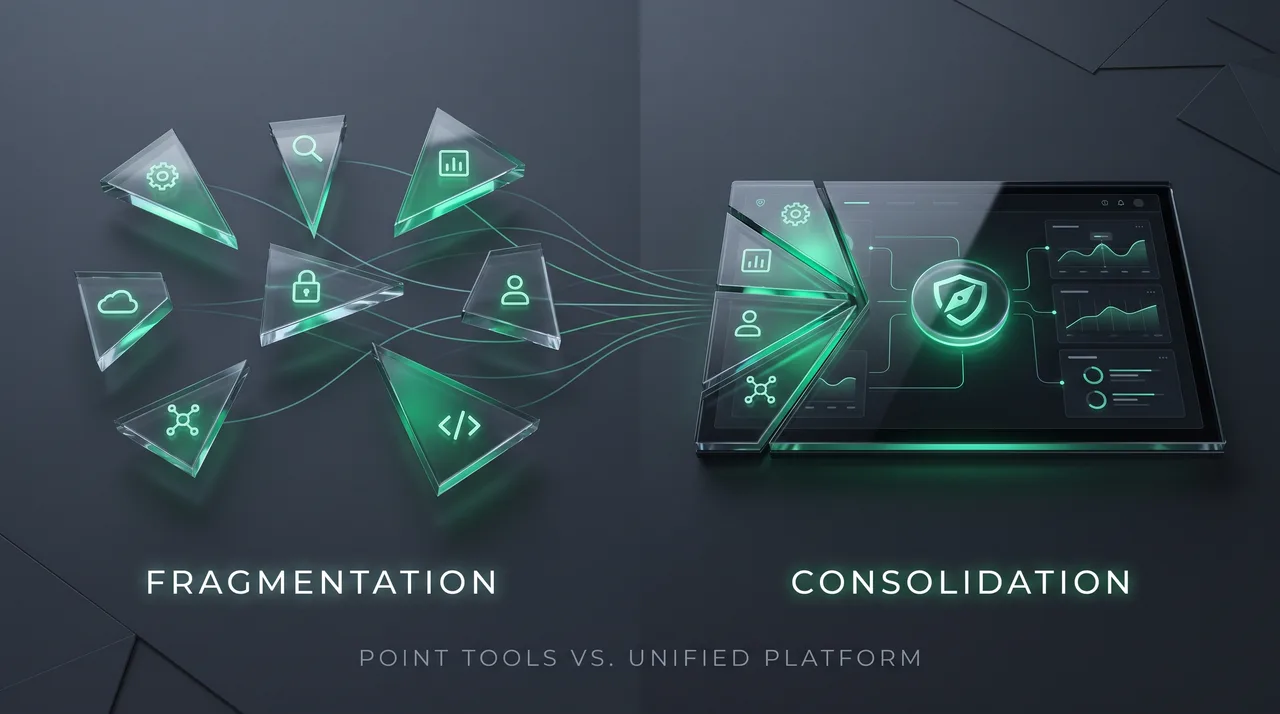
The dream of one tool to rule them all
Let's be honest: managing an SEO tool stack can feel like herding cats. One subscription handles keyword research, another handles backlinks, a rank tracker sits here, a technical crawler sits there, and maybe a content optimizer too. The logins pile up. The invoices pile up faster.
So the pitch for an all-in-one SEO platform is genuinely tempting: one dashboard, one bill, one place to do everything. But can a single tool really replace your whole stack? Or is that just clever marketing?
Let's find out.
Why teams want to consolidate in the first place
Before we judge, it helps to understand the itch people are trying to scratch. Consolidation usually comes down to a few very real pains:
- Cost creep. Five tools at $99–$300 each adds up fast.
- Tool fatigue. Nobody wants to context-switch between six tabs to answer one question.
- Data silos. Your rank tracker doesn't talk to your content tool, so you're copy-pasting numbers into spreadsheets.
- Onboarding overhead. Every new hire has to learn five different interfaces.
Framed that way, wanting one tool makes total sense. The question is whether reality lives up to the brochure.
Where all-in-one platforms genuinely shine
Here's the good news: modern all-in-one tools have gotten really good at the core work. For a lot of teams, a single platform covers 80% of daily needs.
The everyday workflows
Most solid platforms handle these well enough that you'd rarely miss a dedicated tool:
- Keyword research with search volume, difficulty, and clustering
- Rank tracking across locations and devices
- Site audits for technical health
- Basic backlink data for spotting big wins and losses
- Content briefs and on-page suggestions
If you're a small team or a solo consultant, this is often plenty. You get one source of truth, everyone sees the same numbers, and you stop paying for overlap. That's a genuinely great outcome.
Connected data matters too. When your keyword research feeds straight into your content briefs, which feed into your rank tracking, you save actual hours. That workflow glue is where all-in-one tools earn their keep.
Where the all-in-one promise starts to crack
Now the reality check. "Does everything" and "does everything well" are two very different claims.
Backlink data depth
Dedicated link tools have spent years building massive crawlers and indexes. Most all-in-one platforms bolt on backlink data as a feature, not a specialty. If link building is core to your strategy, you'll probably notice the difference in index size and freshness.
Keyword database size and accuracy
Some specialist keyword tools simply have larger, cleaner databases. An all-in-one might miss long-tail terms or lag on volume updates. For most teams that's fine. For teams competing in ultra-niche spaces, it can be a dealbreaker.
Technical SEO at scale
A built-in site crawler is great for a 5,000-page site. Try it on a 2-million-page enterprise site and you'll quickly hit limits that a dedicated log-file analyzer or enterprise crawler wouldn't blink at.
Niche specialties
Think local SEO citation management, SERP feature tracking, JavaScript rendering audits, or advanced content scoring. These are the areas where purpose-built tools still pull ahead. All-in-one platforms tend to offer a "good enough" version rather than best-in-class.
The Semrush alternative question
A lot of people start this journey by searching for a Semrush alternative—usually because they want either lower cost or fewer features they don't use.
Here's the thing: alternatives fall into two camps.
Other all-in-one platforms that do roughly the same thing with different pricing or UX. Great if your gripe is cost or interface.
- Focused single-purpose tools you combine yourself. Great if you only need two or three functions done exceptionally well.
- So the smart move isn't just "find a cheaper all-in-one." Ask what you actually use every week. Plenty of teams pay for a sprawling platform and only touch three features. In that case, a couple of focused tools might cost less and perform better.
A simple way to decide
Before you consolidate (or don't), run through this quick gut-check.
Ask yourself these questions
What are my top three SEO jobs-to-be-done? Rank tracking? Content? Links? Be honest about frequency.
- Where do I need best-in-class, and where is 'good enough' fine? You probably don't need the world's biggest backlink index if you rarely do outreach.
- How big is my site and program? Enterprise scale changes everything.
- What's my true monthly spend across all current tools? Add it up. The number often surprises people.
- How much does workflow friction actually cost me? Sometimes the time savings of one platform outweigh a small drop in data depth.
- The likely verdicts
Solo consultants and small teams: An all-in-one platform usually is enough. Consolidate and enjoy the simplicity.
- Mid-size content-focused teams: All-in-one core, plus maybe one specialist tool for your biggest priority.
- Enterprise or link-heavy teams: Keep a stack. You'll outgrow the all-in-one's ceiling on at least one dimension.
- So, can one tool replace your whole stack?
Honestly? For many teams, yes—an all-in-one SEO platform can replace most of the stack and make life noticeably easier. The consolidation savings and unified data are real wins.
But "replace your whole stack" is a stretch for anyone with a serious specialty. There's almost always one area—usually backlinks or enterprise-scale technical SEO—where a dedicated tool still wins.
The healthiest mindset isn't "one tool or many tools." It's right-sizing your stack to your actual work. Consolidate the commodity stuff, keep a specialist where it truly matters, and stop paying for features nobody opens.
Start with an audit of what you use, not what you're afraid to lose. You'll probably end up with a leaner, cheaper, and surprisingly capable setup—whether that's one tool or a tidy little combination of two.
Start with an audit of what you use, not what you're afraid to lose. You'll probably end up with a leaner, cheaper, and surprisingly capable setup—whether that's one tool or a tidy little combination of two.